

How to Cut Polycarbonate Sheets Safely and Accurately?
Polycarbonate has been increasingly used in many applications, including greenhouse glazing, safety and security shields, aircraft, automotive, and paint protection film. How to cut polycarbonate sheets correctly can be the question that makes the difference between a finished product and a mess. If you're installing polycarbonate roofing sheets for a garden shelter or replacing panels that have seen better days, you can never go wrong with clean, precise cuts, the right tools, and a little patience.
The incredible strength and flexibility of polycarbonate are two of the best things about it, but they also mean you can’t cut it as if it were glass or acrylic. If you do not use proper cutting techniques, your cuts will crack, chip, or have jagged edges, affecting not only the look of them but also their functionality. We will give you a tour of everything related to polycarbonate sheet cutting so you can achieve professional results every time.
How to Cut Polycarbonate Sheets Step by Step
Step 1: Choose the Appropriate Polycarbonate Sheet
It is important to know what kind of sheet you are going to cut before you cut. Polycarbonate comes in different thicknesses and forms, such as solid, multiwall, and corrugated, and each has specialised uses. Multiwall sheets offer excellent insulation and are therefore the right choice for polycarbonate roofing projects, whereas solid sheets are also great for protective screens and windbreaks.
The Polycarbonate Roofing provides a full line of products for various uses, from lightweight Shed roofing sheets to heavy-duty industrial panels.
Step 2: Collect the Required Tools and Safety Equipment
Properly getting dressed is a must. A fine-toothed saw (a circular saw with a carbide blade is perfect for straight cuts), a jigsaw for curves, a straight edge or ruler, clamps, and masking tape. But this is what people don’t realise: safety precautions for cutting polycarbonate aren't just extras. When you cut polycarbonate, it produces very fine particles that can enter your eyes and lungs without you knowing, so it is essential to wear safety glasses, a dust mask, and gloves. Also, ensure good ventilation in your work area.
Step 3: Measure And Mark The Sheet Accurately
There's a lot of truth in what veteran carpenters say: "cut once, and measure twice". Accurate polycarbonate sheet measurements will save you a lot of headaches and ensure a perfect sheet fit. Do not remove the protective film yet, as it serves as a guard against scratches. Use a permanent marker on the film, and, if possible, mark both sides of the sheet. When drawing the lines, a metal ruler or straight edge will do. Check your measurements at various points before cutting to ensure there are no errors.
When planning your project, choose the right panel thickness to ensure the perfect balance of strength, insulation, and durability. The correct thickness improves performance, enhances safety, and helps your panels withstand weather and long-term use without unnecessary cost.
Step 4: Secure the Sheet Properly
Place your polycarbonate sheet on a stable and solid work surface with good support underneath. Sawhorse work tables are perfect. The sheet can hang a little where you cut, but the majority of it should be firmly supported.
Hold it down with clamps and make sure they're put where they won't get in the way of your cut. Place masking tape on both sides of the cut line. This simple tip not only significantly minimises splintering but also holds the sheet in place.
Step 5: Choose Cutting The Right Way
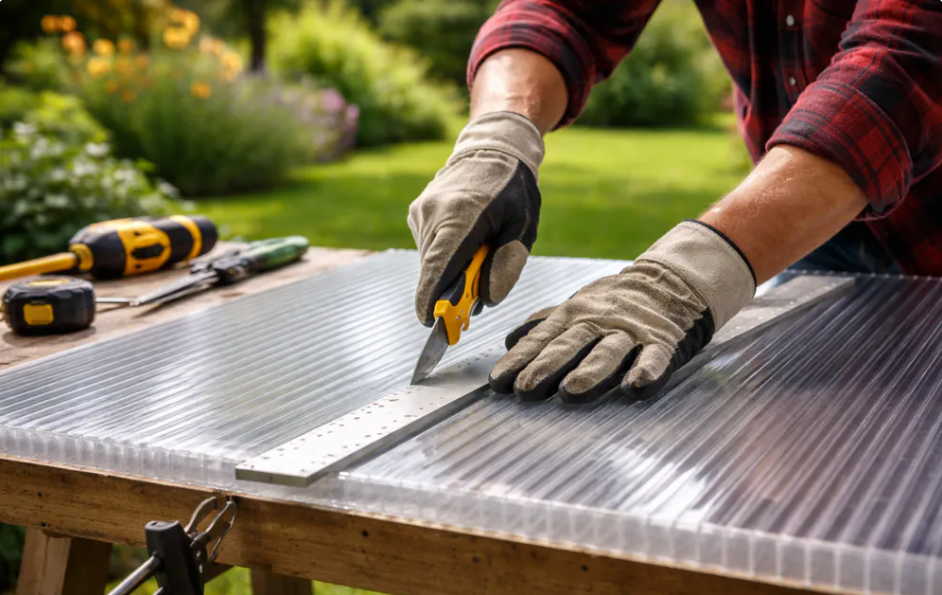
If the board is less than 6mm thick, a sharp utility knife and a few scoring passes should do it, though it's somewhat a test of patience and a steady hand.
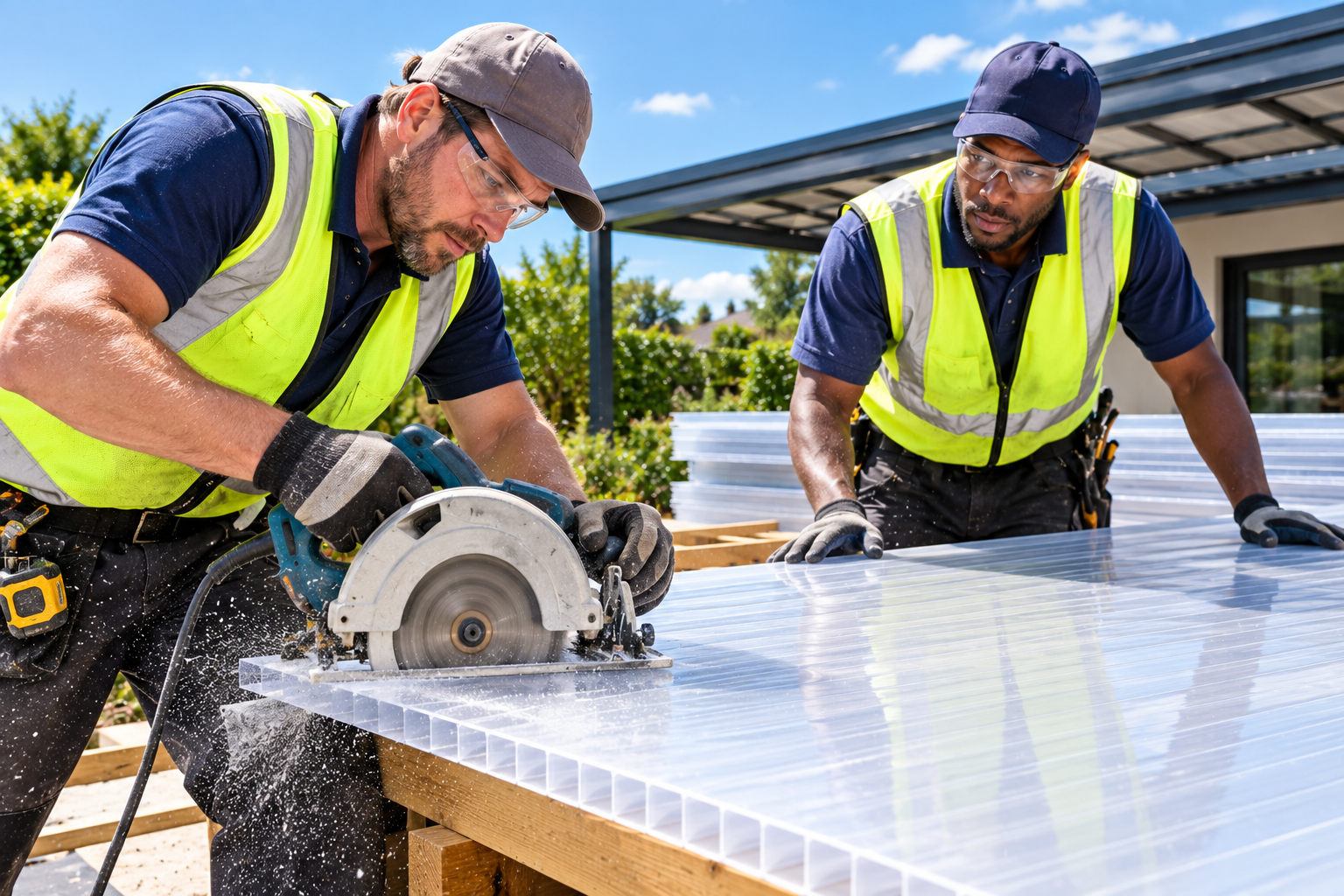
For thicker stuff, power tools are necessary. A circular saw with a fine-toothed blade (at least 10 teeth per inch) is the way to go for a good, straight cut, while a jigsaw is the best choice for cutting curves or intricate designs.
The choice of blade is crucial. If you prefer cleaner cuts with less heat buildup, opt for a blade designed for plastics or metal rather than wood.
Step 6: Start to Cut the Polycarbonate Sheet
The main event has come. The step-by-step polycarbonate cutting process requires a gentle touch, even when using power tools.
Don't set your saw too fast, as it will generate too much heat and the edges might melt. Run your blade along the marked line, applying steady, even pressure. Do not force it; let the tool do the work. If you're using a circular saw, start from the edge and work inward. Make sure you keep the good side of the sheet facing up to minimise visible chipping.
Step 7: Avoid Cracks and Chipping when Cutting
Preventing cracks in polycarbonate sheets comes down to temperature control and technique. It is crucial to keep your blade sharp, as a dull one will cause friction and heat, leading to melting and stress cracks.
When cutting several sheets, stop from time to time to let the blade and the material cool. Always, cut with the protective film on; and by the way, that masking tape we mentioned earlier? It will do a great job of holding the material together and preventing brittle fracturing that sometimes occurs along cut edges.
Step 8: Buff and Finish the Cut Edges
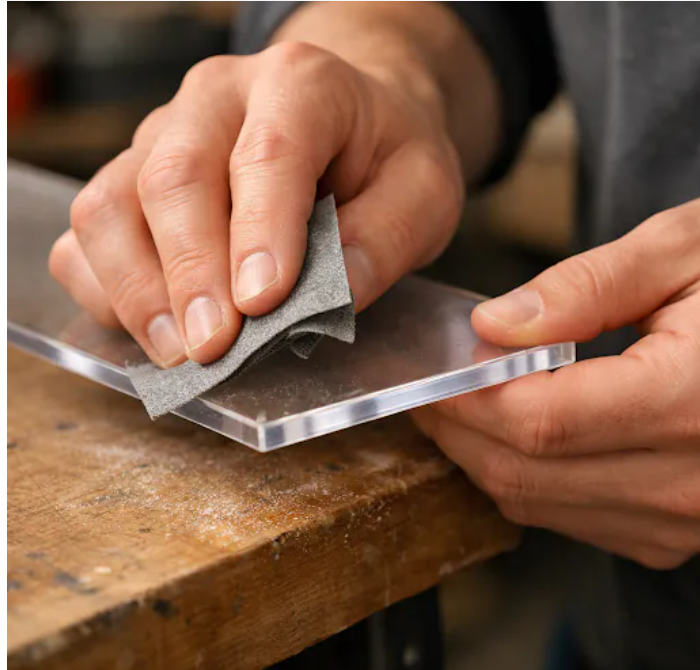
Perhaps the cut looks acceptable at first glance, but good finishing can really elevate a simple one to excellence. Finish off rough edges with fine, grit sandpaper (220 grit is a great choice) or a deburring tool after gently removing any protective film. Work slowly in one direction to avoid scratches.
If the edges are going to be noticeable, you can get a flame polisher or buffing wheel that will give a professional, almost glass-like finish, but this does require a bit of experience to avoid damaging the material.
Things Not to Do When Cutting Polycarbonate Sheet
The mistakes to avoid when cutting polycarbonate often seem minor until they ruin an expensive sheet. Some of the things are:
FINAL WORDS
Mastering how to cut polycarbonate sheets accurately transforms intimidating projects into manageable tasks. The process of cutting polycarbonate sheets from beginning to end that we've gone over - from choosing the right sheets and putting on safety equipment to finishing edges like the pros - will make sure you get clean results without cracks every single time.
Keep in mind that accurate polycarbonate sheet measurements, proper tool selection, and adherence to safety guidelines while cutting polycarbonate are the basics of success. Be patient, take all the steps, and before you know it, you'll be making cuts that rival the pros!
When it is time to embark on a new project, PolycarbDirect has all the supplies you will need to carry out expert polycarbonate sheet cutting.
FAQ's
1. What’s the safest way to cut a polycarbonate sheet?
It is safest to wear adequate and appropriate PPE (eye protection, dust mask, gloves); work on a stable surface with good support for the sheet; use the proper tools for the job, including sharp blades; and proceed at a moderate speed so heat does not build up. And never hurrying, make sure to hold the sheet tightly in place once again before you start cutting
2. Can I cut polycarbonate roofing sheets at home?
Absolutely! With the right tools and the right info on how to cut polycarbonate sheets at home, it's definitely something you can do for your do-it-yourself projects. Practice your technique by cutting strips from spare material before using the best-quality sheets for the main project.
3. How can I avoid cracking when I cut polycarbonate sheets?
Cracks when cutting polycarbonate sheets can be largely avoided by using sharp blades, cutting at a moderate speed, fully supporting the material on both sides of the cut, and keeping both the tool and the work material cool when possible. Besides, applying masking tape along the cut lines is another way to secure the cuts.
4. Which tools are best for polycarbonate sheet cutting?
For straight cuts with a circular saw fitted with a fine-toothed carbide blade, it offers a perfect balance of precision and speed. On the other hand, a jigsaw can nicely make curves. Thin sheets can be scored manually if you have the time. The quality of the blade should always be prioritised; using cheap blades will only cause costly trouble.
5. Are polycarbonate sheets good for shed roofing projects?
They are wonderful for sheds, actually! Polycarbonate sheets offer the strength, light transmission, and weather resistance that other traditional materials simply cannot provide. The Polycarbonate Roofing offers different profiles that are perfect for shed applications, offering strength and value