
Polycarbonate vs Metal Roofing Sheets: Key Differences Explained
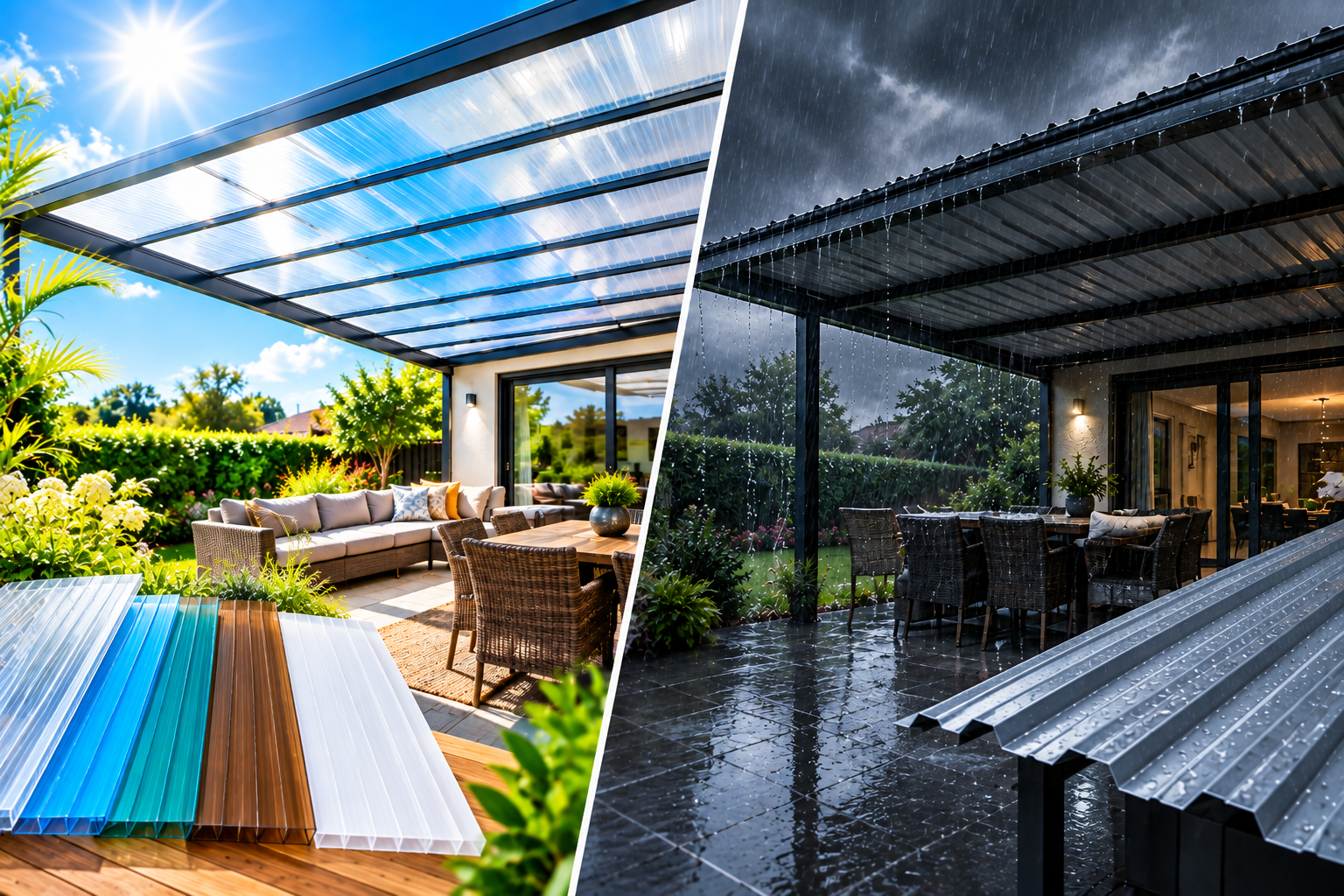
Choosing the right roofing material is more than just looking at a nice line. It is also a matter of how durability, insulation, light, comfort, and long-term costs are affected. On the one hand, when comparing polycarbonate vs metal roofing sheets, many people are unsure whether to choose a strong, transparent material or one that stands out for its low weight and insulation, or even consider the product's cost and longevity.
Both materials are common in residential and commercial environments. It would be a good idea to compare polycarbonate roofing vs. metal roofing to pick not only the option that best fits your project, but also the most cost-effective.
Here is a clear and practical explanation of the matter.
Polycarbonate roofing sheets composition
Polycarbonate is an engineered plastic with remarkable performance. It is known to be lightweight, strong and transparent. One feature that sets it apart from standard plastic is its resistance to impact and weather.
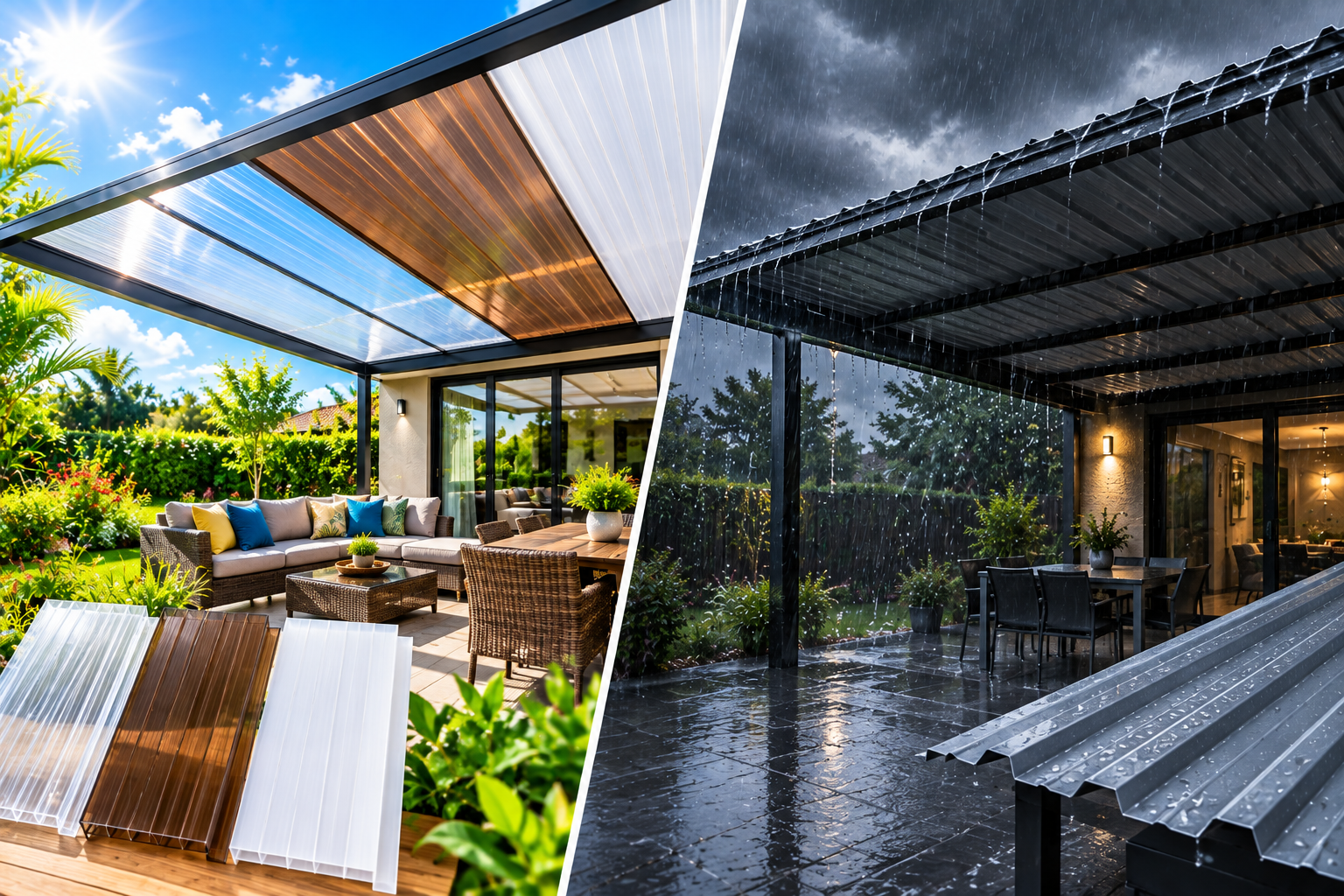
There are three major varieties:
Polycarbonate roofing sheets are the go-to materials for pergolas, greenhouses, patios, carports, and skylights. They are loved by the customers because they let the sunshine in while at the same time they offer protection from the sun and the rain.
The main features are as follows:
Many contemporary outdoor designs employ premium polycarbonate roofing to deliver an attractive, durable solution
What Are Metal Roofing Sheets?
Metal roofing sheets are usually steel or GI with zinc coating, aluminium or zinc. They’ve been used for years in industrial and commercial applications.
Standard profiles are:
You can usually find metal roofs on warehouses, factories, and storage sheds, as well as on metal garage roof sheets.
Metal sheets are:
When comparing polycarbonate vs metal roof sheets, the fundamental difference starts with material composition polymer versus metal alloy.
Polycarbonate vs. Metal Sheets: What Are the Differences between the Two Materials?
Now let's talk about how the two materials stack up.
Make-up of Material
The first difference to consider in the polycarbonate vs metal roofing sheets debate is composition. Polycarbonate is a high-performance, flexible, impact-resistant thermoplastic polymer. Metal roofs are made of steel or aluminium alloys that are designed to be rigid and strong.
This distinction affects nearly every performance metric.
Weight and Structural Load
Polycarbonate sheets are much lighter. This makes them more suited to transport, and to easy handling, that is, cutting, drilling, and mounting. Because the sheets are lighter, the load on your structure is less, so you don’t necessarily need solid support beams, too.
Metal roofs are heavier and usually require more robust structural framing. The additional strength, of course, enables them to excel in covering large industrial buildings. It can increase installation difficulty in small garden sheds.
When comparing polycarbonate roofing vs. metal roofing, weight may be a factor in your DIY decision.
Light Transmission & Visibility
And this is where polycarbonate clearly beats the rest.
Polycarbonate sheets transmit natural daylight while acting as a heat shield. Clear or colored tints let you brighten up a room without making it too hot or too cold. That makes them a good choice for pergolas and garden areas with pergola roof panels.
There is, however, one disadvantage of using metal roof panels: they block all light. They are completely opaque, which is great when you need total shade, but not so good when you need to let in daylight.
In comparing polycarbonate vs metal roof sheets, light transmission is often the primary deciding factor.
Durability & Impact Resistance
Metal roofing is solid and dent-proof. It holds up well in high winds and heavy snow.
Polycarbonate is a different matter. It’s pliable and impact-resistant rather than inflexible. It has good resistance to shatter fractures and handles hail or falling branches well.
When it comes to polycarbonate vs metal roofing durability, both are leaders in strength, just in different areas. Metal sustains heavy loads; polycarbonate does not shatter on impact.
Weather & UV Resistance
Good-quality polycarbonate has a UV-protective layer. Such treatment prevents yellowing and decomposition over time. The premium sheets also offer protection from the sun and rain while keeping their transparency.
Metal roofing holds up well to the weather, though it can rust if not adequately protected. Rust may develop more rapidly in coastal areas, unless the metal is adequately treated.
Therefore, the long-term performance in the polycarbonate vs metal roof sheets contention largely depends on the environment and the grade of material.
Thermal Insulation and Heat Control
This is also a huge difference.
Multiwall polycarbonate provides natural insulation thanks to its hollow chambers. It impedes heat transfer while allowing light in. When comparing polycarbonate vs metal roofing insulation, polycarbonate tends to win for outdoor comfort.
The metal roof heats up quickly. On hot days, it can become very warm unless additional insulation is installed underneath.
If temperature regulation is important, particularly for greenhouses, polycarbonate panels for green houses, polycarbonate has obvious benefits.
Noise Levels During Rain
Metal sheets, on the other hand, can be loud when it rains or hails on them. The sound can be amplified if insulation layers are missing.
Polycarbonate is brighter and also absorbs sound better, reducing echo. This is what you see with conservatories or patio covers.
In real-world applications of polycarbonate roofing vs metal roofing, comfort during rainfall often influences the final decision.
Price Comparison – Polycarbonate vs Metal Roofing
Price always factors in somewhat.
The material cost for metal sheets can be on the lower side, particularly for plain corrugated options. However, a more robust structure may be necessary for installation.
While polycarbonate is slightly more expensive per sheet, its lightweightness may reduce structural and installation costs.
Long-term costs are important. Maintenance, anti-corrosion protection, and replacement frequency contribute to the total value of an item.
When considering polycarbonate vs metal roof sheets, it is essential to look at the lifecycle cost rather than the initial cost alone.
Lifespan & Durability
With proper installation and maintenance, metal roofing can last 30 to 50 years.
Good-quality polycarbonate has a lifespan of 15–25 years when adequately UV-protected.
In discussions about polycarbonate vs metal roofing durability, metal often has a longer lifespan. However, corrosion, dents, and coating damage can shorten that lifespan.
The longevity of polycarbonate is largely determined by UV protection and proper installation.
Installation & Maintenance
Polycarbonate sheets can be cut and drilled more readily. They’re good for DIY-friendly installations. Adequate space for expansion is necessary.
Metal roofing requires specialised equipment for cutting and installation. The sharp edges and weight need more care in the installation.
Metal maintenance may include checking for rust or resealing fasteners. Polycarbonate needs to be cleaned periodically to maintain its clarity.
Best Use Cases for Polycarbonate Roofing Sheets
Polycarbonate is very good for:
It’s ideal where light, comfort, and modern aesthetics matter. Many property owners choose premium solutions from The Polycarbonate Roofing for reliable clarity and UV protection.
Best Use Cases for Metal Roofing Sheets
Metal roofing is a good choice for:
You can count on its strength and rigidity, making it well-suited for tough conditions
Which Roofing Sheet to Choose?
While choosing between polycarbonate vs metal roofing sheets, keep in mind:
For bright, comfortable outdoor spaces, polycarbonate often wins. For sheer, unbelievable strength and heavy loads, metal roofing is always a dependable choice.
Homeowners and commercial customers who want trusted, high-quality polycarbonate products will find The Polycarbonate Roofing the best choice for solid, tough sheets that can handle whatever the weather throws at them, with no loss of clarity or strength.
Final Thoughts
The conversation about polycarbonate vs metal roofing sheets is not really about which one is superior in general, it is the one that is best for your particular project. When it comes to natural light, ease of installation, and enhanced insulation, polycarbonate delivers. If you want maximum strength and all-action industrial-grade toughness, metal roofing remains a great option.
You should be able to make a confident and informed decision on both your structure and budget when you know the real differences between polycarbonate roofing and metal roofing
faq's
1. Which type of roofing sheet is more durable?
While metal roofs tend to last longer, both are great options and, if installed correctly, can really stand the test of time.
2. Can polycarbonate roofs withstand heavy rain?
Yes! High-quality product sheets have good impact resistance and function as a sun and rain shield.
3. Is metal roofing hotter than polycarbonate?
Yes. Metal heats up quickly, but multiwall polycarbonate has good insulation properties.
4. Which roofing sheet is the cheapest?
That depends on the application. Metal might be the cheaper option to start with, but polycarbonate might save you on comfort and on building costs.
5. Is polycarbonate roofing suitable for outdoor use?
Sure is. UV-coated product sheets have been engineered for use in outdoor and other similar applications